
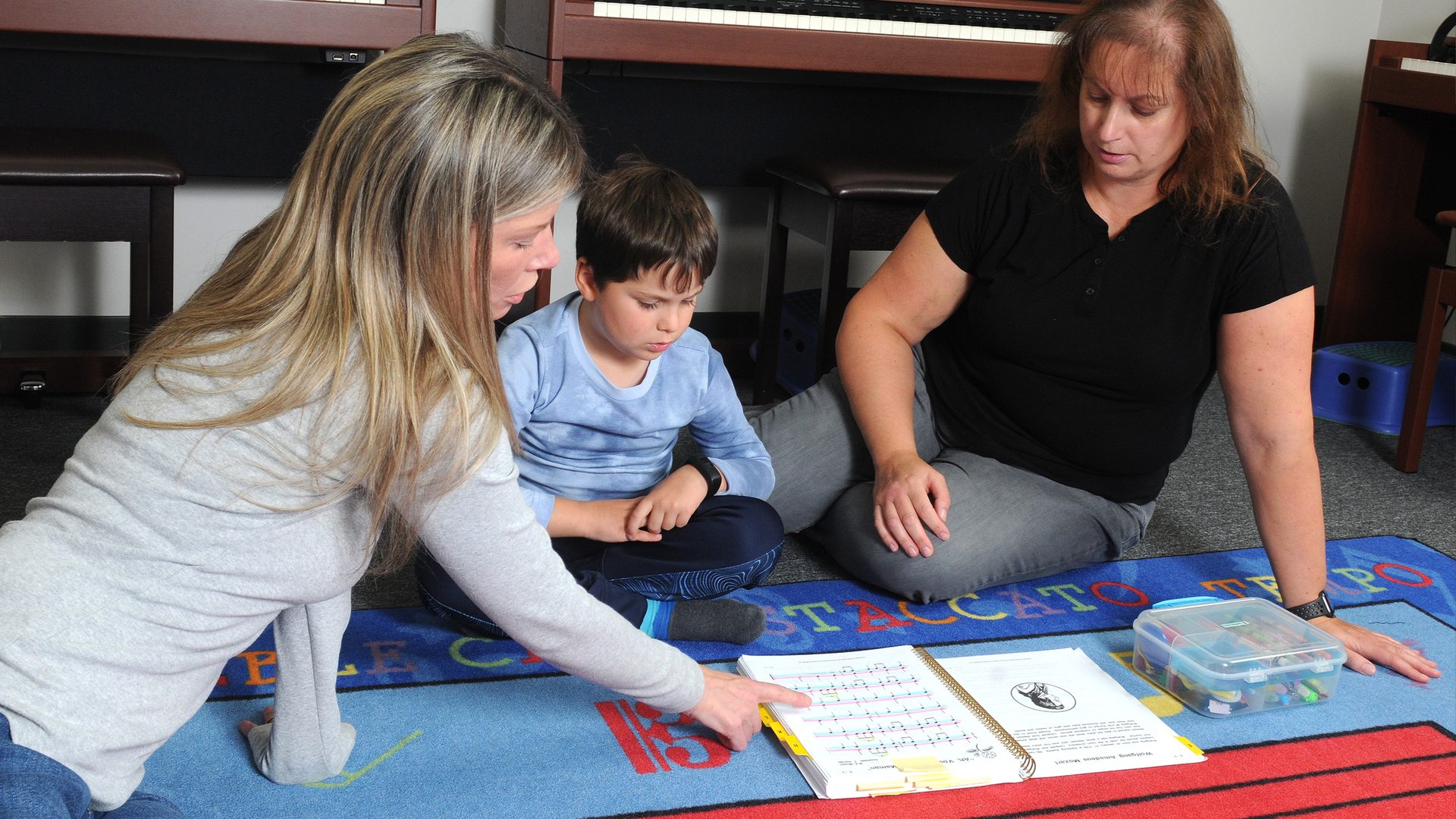
MYC's curriculum was created to build and sustain a wide and firm foundation in music education, appreciation and performance for young children. Our students not only learn how to play the piano and read music, but are also taught the other important elements, such as sight-reading, composition and ensemble playing, that help create a solid, educated and well-balanced musician.
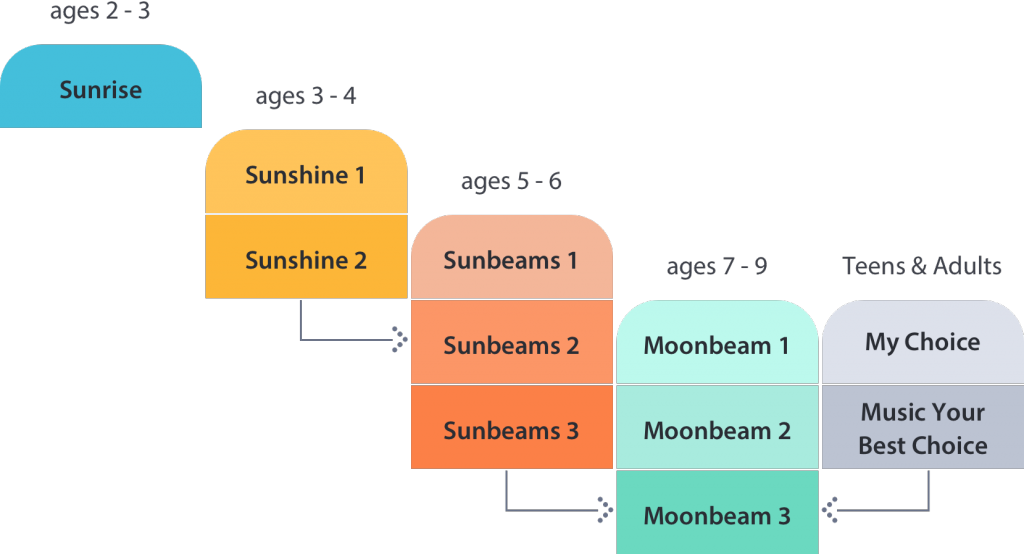
Regardless of whether your child continues in music study after MYC®, our method provides your child with such a wide knowledge of musicianship and appreciation that they will carry the love and knowledge of music with them throughout their lives.
MYC is the only early-childhood music education method that integrates and utilizes Conservatory repertoire within our own method, working towards each MYC graduate completing their first piano exam and theory exam.
Each concept that is taught in MYC is introduced and supported through the four learning styles: auditory, tactile, analytical and visual. This ensures that every child in MYC has the highest level of success in learning each concept and being able to apply and manipulate that information as needed.
MYC classes engage the four learning styles through incorporating the following essential elements and activities in every 1-hour, weekly lesson:
Singing
Children love to sing. It is an important way for children to express themselves, and it widens their ability to learn and accept new concepts. MYC students experience a variety of songs to introduce and support musical concepts, provide movement and connection with their parent, or simply for enjoyment. MYC also develops ear and sight-singing through Solfege.
Listening
Children need to be taught how to listen and what musical elements to listen for. The ability to actively listen and identify different elements in music is essential to musical literacy. Students strengthen listening skills through:
- Writing Rhythm Stories with manipulatives through dictation
- Playing back simple melodies on the piano after hearing them
- Active auditory analysis of dynamics, tempo, articulation and chord quality
- Well-known melodies and composer or style identification
Homework
MYC programs are designed to ensure that each student reaches their full potential, with opportunities to review materials covered during class. Homework ranges from gluing and colouring tasks for youngest students to scale writing and vocabulary exercises for second or third level students.
Keyboard/Piano
MYC students begin learning keyboard geography with a D-centred approach and the MYC Critters, using stories children can grasp and relate to through incremental introduction and constant review.
In Moonbeams 3, students move toward Conservatory repertoire in preparation for completing their Level 1 or Grade 1 piano exam. Fun MYC terminology is replaced with standard music terminology and vocabulary to support a smooth transition to private lessons.
Rhythm Ensembles
Rhythm ensemble work gives each child an opportunity for success reading simple to complex rhythm while staying together as a group. Students experience well-known melodies, different musical periods and styles, rhythm reading, ensemble focus and many different rhythm instruments.
Composition
Children are creative, and MYC gives them tools to create their own compositions. Even at age 3 in Sunshine 1, students learn the foundation of compositional techniques and build on those techniques each year.
Student Materials
Each MYC student receives program materials designed and produced for their age and development, including learning tools and a comprehensive student manual. Materials are bundled to avoid multiple material costs through the learning year and are made for durability and sustainability.
For a more detailed breakdown of each level's goals and sample pages from the student manuals, have a look at the Course Sampler.
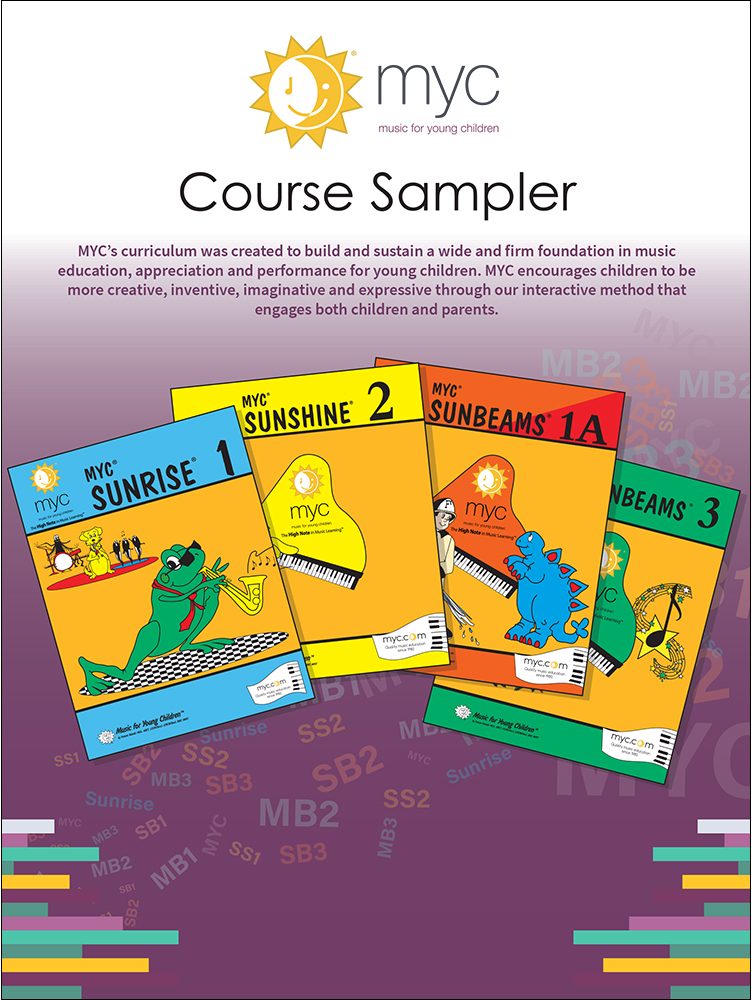
Course Sampler
Open the MYC course sampler PDF.