
Why Your Child Should Study Music
Every day it seems as though there are more and more articles about the benefits of learning music, especially piano, and it is true. From developing cognitive skills to establishing self-esteem, by enrolling your child in music lessons, you are providing an amazing foundation of skills that they will carry with them for the rest of their lives.
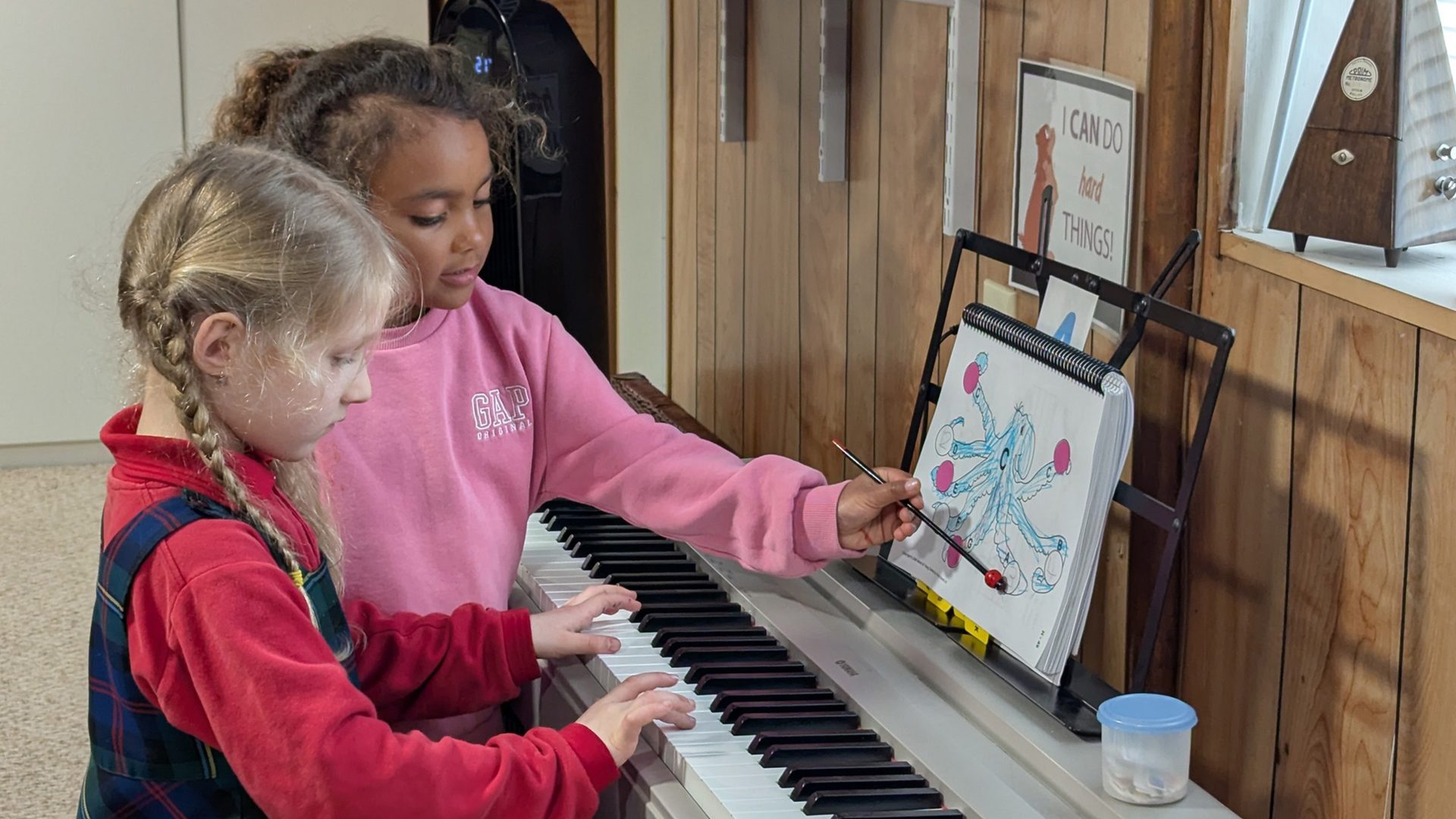
There are even more benefits when your child learns in a small, group setting. These children learn from the very beginning how to interact with others and develop their social skills in a caring and safe environment. They learn how to work together in group situations and set goals as a group, while also developing the ability to work independently and set individual goals.
Since the ability to read and play music is considered a language, when a child engages in learning piano, the brain is actively using not only the creative area but the language area as well. By engaging these two areas at the same time, growth and development in the brain is higher. Children who take piano lessons are able to solve complex math problems earlier and faster, learn other languages with more ease and confidence, and think through problems, situations and different environments with stronger adaptability. Students who study piano are also stronger athletes, as eye-hand and eye-foot coordination are more highly developed, and they are able to visualize the next move and strategize faster and better.
Brain Cooperation in Composition
The moment that children in MYC® realize that they can have control of their music through writing their own compositions, they immediately feel empowered and engaged. Their self-esteem grows and their self-worth is strengthened and solidified.
Composition in MYC allows children to explore their foundation in music education creatively, while giving them a foundation of knowledge of compositional techniques on which to build and expand that creativity.
Our students first learn all composition techniques and concepts through art and imagery, to ensure that each child has the opportunity to completely understand and apply the concept before they have to worry about using that concept within their music writing. Once students understand and are able to apply that concept visually, they are gradually transitioned from the art to the actual writing of music, either through MYC Critters in the younger levels or on the staff with older children.
Through all of this, MYC students' brain cooperation is enhanced and significantly improved. With composition alone, students engage creativity, analysis, listening skills, deductive reasoning, self-worth and confidence, while solidifying their ability to manipulate learned concepts for different environments and situations.